
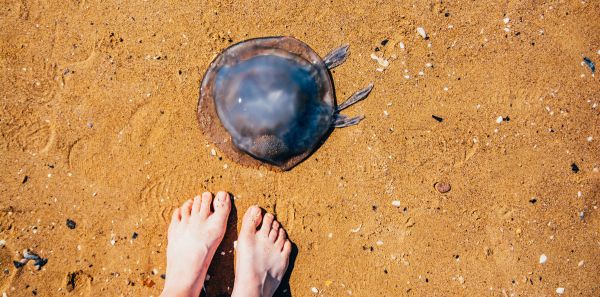
Jellyfish stings are fairly common in summer among people swimming in the sea. Contact usually causes severe, immediate pain and swelling in the affected area. Although the wound usually heals within a few days, it is important to follow certain guidelines and recognise warning signs. Find out more below.
Jellyfish sting symptoms
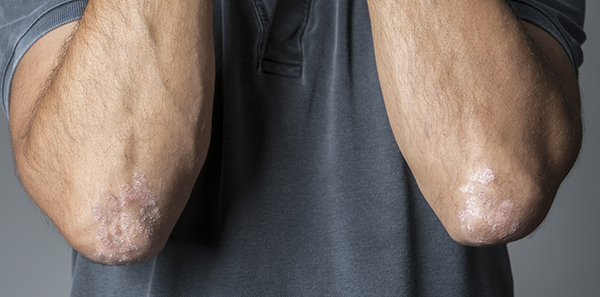
The main symptoms are burning, stinging pain and itching in the affected area. The lesions include hives, swelling, raised bumps and linear swelling of the skin. Severe stings may cause stomach pain, nausea, vomiting, muscle cramps, dizziness, confusion, difficulty breathing, headache or heart problems. If these more serious symptoms appear, urgent medical attention should be sought. The lesions may also become infected after a few days
The groups most at risk of serious side effects are the elderly, children, and people suffering from asthma and allergies. The severity also depends on the amount of skin affected and how long the sting lasted.
What to do if you’ve been stung by a jellyfish
- Get out of the water immediately. Do not stay in the water, as there may be more jellyfish or their tentacles may stick to your skin even more. If you are having difficulty swimming, alert someone nearby.
- Do not scratch or rub the area, or apply any pressure to it.
- Wash the wound with sea water or saline solution. Never use fresh water, as this spreads the venom.
- If there are any tentacle fragments stuck to your skin, remove them with tweezers and gloves, taking care not to touch them with your hands.
- Protect the area from the sun.
- Cool down the wound for about 15 minutes. If using ice, make sure it does not directly touch your skin; wrap it in a towel.
- To soothe the symptoms, apply a pharmaceutical cream containing a mild corticosteroid.
If you experience severe symptoms, visit a health centre or contact the emergency services. In such cases, it is very helpful to know which type of jellyfish has stung you.
What NOT to do if you have been stung by a jellyfish
- Clean the wound with fresh water. This must be avoided at all costs, as it breaks the stinging cells and can cause the sting to spread.
- Use ammonia or alcohol. They irritate the skin and cause further damage.
- Urinating on the affected area. This can infect and irritate the wound.
- Scratch or rub the wound. This can cause skin damage and spread the venom.
- Use compression bandages.
- Apply ice directly to your skin. This can cause cold burns and make it harder to remove the venom.
- Apply vinegar. Its use is recommended only for Portuguese man-o’-war stings, but is not recommended for stings from other species.
How to prevent a jellyfish sting
- If you see jellyfish in the water, do not go in, even if they are far away. There may be fragments of tentacles, as small as a sewing thread, which can cause the same reaction.
- Do not touch jellyfish out of the water. They can still sting up to 24 hours after they have dried out.
- If there are a lot of jellyfish, notify the lifeguard station.
- Pay attention to the flags, as there are specific ones for jellyfish.
- Avoid the surf zones, as this is where more fragments of tentacles tend to accumulate, especially when the wind is blowing from the sea towards the land.
- If you are in the water, move away from the jellyfish slowly and avoid sudden movements.
- Wear wetsuits when diving, as they protect against stings.
If you are stung by a jellyfish, it is important to know what to do to minimise complications and promote a speedy recovery.