
More and more people are becoming aware of their excessive mobile phone use and are deciding to limit it in order to regain their peace of mind and improve sleep quality. Here are our top tips for breaking the habit of constantly checking your mobile phone.
Benefits of reducing screen time
This change offers more than just mental health benefits. Reducing mobile phone use lowers stress and anxiety levels, but it also reduces sedentary behaviour, improves eye health, promotes more restful sleep and encourages socialising.
It also reduces the constant need to know what your contacts are up to, boosts self-esteem by reducing the tendency to compare yourself to others, and combats FOMO (the fear of missing out).
Tips to reduce screen time
- Be aware of how much time you spend looking at your mobile phone
The devices have tools installed, such as Digital Wellbeing on Android or Screen Time on iOS, which allow you to check your usage and the apps you use most often. This can help you set clear limits and goals to reduce your consumption. You can use the time you save to take up a new hobby or enjoy an activity, such as playing sport, drawing or reading.
- Set time limits on apps
This setting can be adjusted directly on your device itself. It is very useful when you notice that you use a particular app excessively. You set a time limit, and once it has elapsed, the app locks until the following day. It is important not to set the limits too high, as this will lead to a loss of motivation. We recommend starting by reducing the time by a few hours and gradually increasing it.
- Disable notifications
If you’re constantly receiving notifications, it will be much more tempting to look at your mobile phone or open your apps.
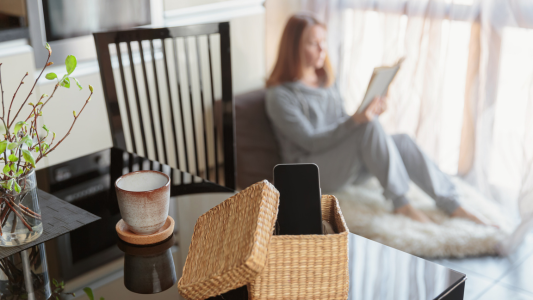
- Always leave your mobile phone in the same place
This will stop you from walking around the house with your mobile phone in your hand and means you’ll always know where it is when you want to pick it up. If you want to stop worrying about it and enjoy some peace of mind, it’s important to put your phone on ring mode (keep notifications off).
- Do not use your mobile phone during mealtimes
It is very common to look at your mobile phone or watch a video whilst eating. However, this has a negative effect on digestion and makes it harder to recognise when you are full. During meals, it is important to focus on the taste of your food.
- Use a traditional alarm clock
Checking your mobile phone before going to sleep or as soon as you wake up has a negative impact on your circadian rhythms and melatonin production. This can be avoided by using a traditional alarm clock and leaving your mobile phone in another room.
- Turn off or silence your mobile phone.
During work, family, or social gatherings, if you are expecting important news or a call, leave the phone with someone else who can answer it and is not participating in the meeting. This is a sign of respect and shows that you value the activity at hand.
Wanting to disconnect from your mobile is the first step towards change. However, it’s normal to have setbacks and there will be days when you spend more time on your device. The important thing is to have a clear goal and to be aware of all the benefits, so that enjoying the present without a screen becomes easier and easier.