
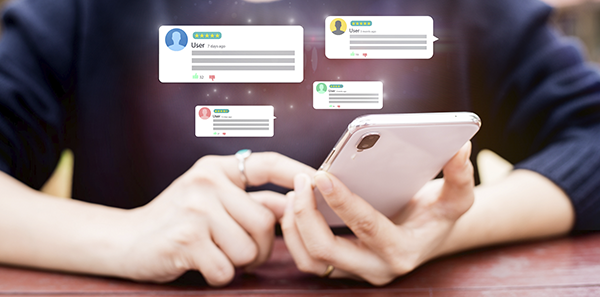
In recent years, social media has become the main source of health-related information for many people.
It is easy, quick and accessible to everyone, but can we trust everything we find on social media? Although these platforms can help us discover new healthy habits and find answers to our questions, following health advice without checking its reliability can have consequences for our well-being.
The Main Risks of Following Health Advice on Social Media
– Self-diagnosing based on videos or posts: Recognising your own symptoms in social media content does not mean that you are suffering from the condition being described. Everyone has different circumstances and therefore requires specific treatment tailored to their individual needs.
– Following diets or taking supplements without professional supervision: Some nutritional recommendations may be unsuitable for certain individuals and can even lead to imbalances and adverse effects. This is why it is very important to seek advice from a healthcare professional.
– Stopping treatments prescribed by doctors: Following recommendations from people without medical training may lead us to stop taking prescribed medication or replace an existing treatment with another that may not be suitable for our condition.
– Causing unnecessary concern or creating false expectations: Alarmist content can increase anxiety and cause unnecessary worry, even when there are no symptoms or reasons for concern.
How Can We Identify Reliable Health Information?
Not everything published on social media is necessarily false, but it is important to learn how to distinguish accurate, evidence-based information from information that has no scientific foundation. To do so, we can take the following points into consideration:
– Credible sources: If we cannot identify who is behind a particular source or information channel, we should exercise caution. It is advisable to consult content produced by qualified healthcare professionals, medical institutions and official organisations.
– Check the date and whether the content has been updated: Nowadays, medical knowledge evolves as new research and scientific evidence emerge. For this reason, it is important to consult up-to-date information and avoid sharing posts without first checking whether they are still relevant and accurate.
– Be wary of miracle cures: Sometimes, posts may appear to offer solutions to every problem through miracle cures or quick fixes, but the reality is rarely that simple. Following such advice can pose health risks and may even make an existing condition worse.
– Avoid potential commercial interests: Whenever we come across health advice, it is very important to make sure that it is not accompanied by a paid link. If the recommendation encourages you to purchase a particular product, it may be linked to an advertising agreement with the brand.
The Importance of Consulting Healthcare Professionals
Social media can be a useful tool for accessing health-related information, but it should never replace the diagnosis, treatment or advice of a qualified healthcare professional.
Medical professionals play an essential role in society, as they help improve people’s quality of life. They do not simply treat illnesses; they also listen to their patients, guide them and provide support throughout every stage of their lives.
At ASSSA, as a health insurance company, we have an extensive directory of trusted medical professionals and healthcare centres who are committed to looking after our policyholders’ health. Furthermore, to ensure high-quality healthcare, we offer direct access to a wide range of specialists and the option of obtaining a second medical opinion. We also work with numerous multilingual medical centres, offering translation services and access to international hospitals.