
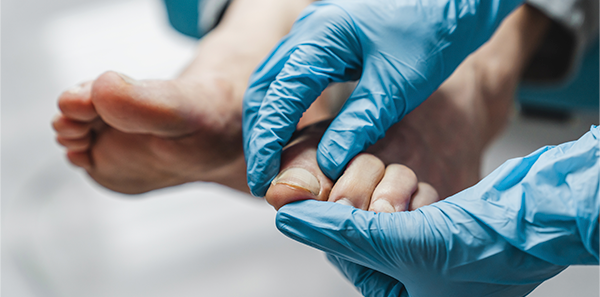
Onychocryptosis, commonly known as an ingrown toenail, is one of the most common nail problems in podiatry, dermatology and general medicine, especially in young patients.
It is a common condition in which the edge of your nail grows into your skin, causing pain, inflammation and even infection. It develops when your nail does not grow properly and usually occurs on your big toe.
The latest prevalence data are from 1992, provided by the US National Health System, showing a prevalence of 2.5-5% and a male predominance. Diabetic patients have been reported to have an incidence of 13 to 32% and greater complications due to the presence of other diseases associated with diabetes itself.
The causes are multifactorial, mainly due to biomechanical imbalance (incorrect body posture), poor fitting footwear or socks in young patients, excessive sweating (hyperhidrosis), improper nail cutting and nail thickening in adult patients.
Among the most common complications is pyogenic granuloma, which is an overgrowth of granulation tissue (tissue that forms during wound healing/scarring) caused by the wound repair process itself. Cases of bone tissue infection or bone infection have also been reported in recurrent and long-term cases.
How is it treated?
Initial care involves:
- Soak the affected foot in warm salt water for 15-20 minutes several times a day.
- Wear comfortable footwear and avoid pressure on the area.
- Keep the affected area dry and clean.
- Apply an anti-inflammatory/antibiotic cream.
- Soak your feet before cutting your nails to soften them. Cut them straight across, following the natural edge of the nail. Do not round or file the corners.
- Do not cut the part of your nail embedded in the skin, as this may aggravate the situation.
If the ingrown toenail does not respond to initial care measures, you should see a podiatrist and follow the recommended treatment:
In mild cases, chiropody, a conservative treatment, is recommended. It consists of treating your nail to correct its growth and prevent future infections and discomfort. Your nails are cut and filed down (their thickness is reduced) using specific techniques.
In moderate/severe or recurrent cases, surgery is recommended. Partial chemical matricectomy with phenol is of particular note, as it is a minimally invasive procedure with reduced side effects, as well as greater safety and medical support. It is performed under local anaesthetic and consists of removing the portion of your nail that is causing problems and part of the nail matrix (the area responsible for its growth) without the need for incisions or stitches in your skin, providing immediate relief for the patient.
In short, if you have an ingrown toenail, it is important to consult a podiatrist, especially if you are experiencing great discomfort, your skin is inflamed, there is pus, or you have conditions such as diabetes or poor blood circulation.
Dr. Gema Santos Quero
Podiatrist at Centre Mèdic Europa